
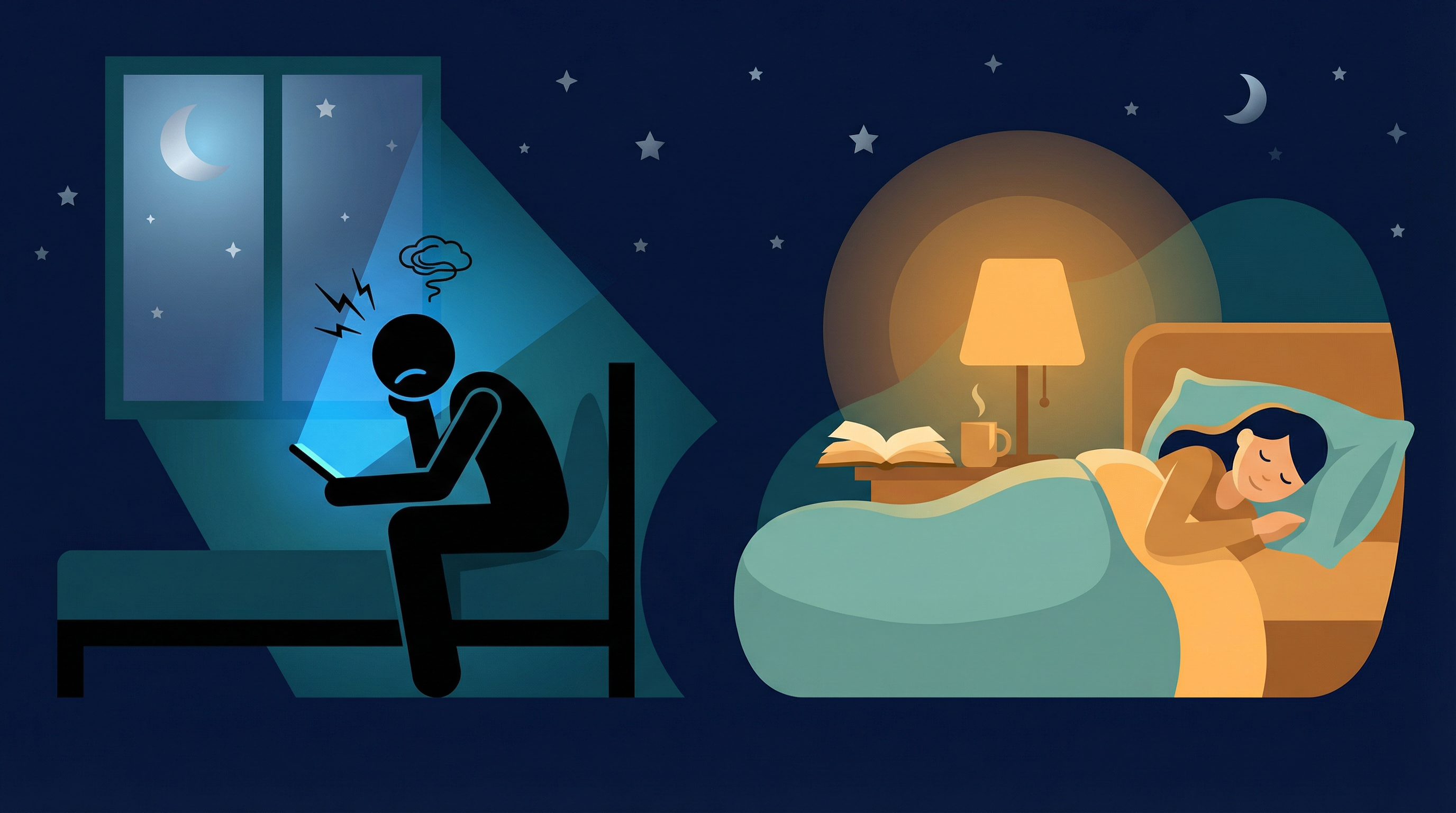
Bedtime scrolling is a special kind of trap. You're tired. Your willpower is depleted from the day. Your brain is looking for easy dopamine. And there's your phone, right on the nightstand, glowing with notifications.
The result: you stay up later than intended, sleep worse, and wake up tired - then reach for your phone first thing to do it all again.
Breaking this cycle requires a different approach than daytime phone use. Here's what actually works.
Why Bedtime Scrolling Is Especially Hard to Stop
Late-night scrolling isn't just a habit - it's a perfect storm of conditions that make stopping nearly impossible:
Willpower Depletion
Self-control is a resource that gets used up throughout the day. By bedtime, you're running on empty. The decision to put down your phone requires willpower you don't have.
Revenge Bedtime Procrastination
If your day is full of obligations, bedtime might feel like the only time that's truly yours. You stay up scrolling as a way of reclaiming personal time - even though you're sacrificing tomorrow's energy.
Avoiding Sleep Anxiety
For some people, lying in the dark with nothing to do brings anxious thoughts. Scrolling is a way to avoid that discomfort. The phone becomes a pacifier.
No Natural Stopping Point
Infinite scroll means there's always one more post. Unlike a TV show that ends or a book chapter that concludes, social media never signals "you're done."
The Environment Change That Works
Willpower-based strategies fail at bedtime because you don't have willpower left. Instead, change your environment so the desired behavior is the easiest option.
1. Remove the Phone from the Bedroom
This is the most effective change you can make. Charge your phone in another room. Yes, you'll need an actual alarm clock. Yes, it feels weird at first. But if the phone isn't within arm's reach, you can't scroll.
If you absolutely must have your phone nearby (on-call for work, etc.), at least put it across the room so you'd have to get up to check it.
2. Create a Physical Barrier
Put your phone in a drawer, a box, or even a timed lockbox. The extra step required to access it is often enough to break the automatic reach.
3. Make the Bedroom a Phone-Free Zone
Not just at bedtime - always. Your brain creates associations between places and activities. If you never use your phone in bed, your brain stops expecting it there.
Build a Replacement Routine
You can't just remove scrolling - you need to replace it with something. Otherwise, you'll lie in bed craving the stimulation. Here are options that work:
Reading (Physical Books)
A physical book provides enough engagement to satisfy your brain without the endless scroll or blue light. Keep one on your nightstand. Even 10 pages is better than 10 minutes of scrolling.
Audio Content
Podcasts, audiobooks, or sleep stories can satisfy the urge for content without the visual stimulation. Set a sleep timer so it turns off automatically.
Simple Relaxation
Breathing exercises, gentle stretching, or progressive muscle relaxation. These are boring compared to TikTok - that's the point. They help your body wind down.
Journaling
Writing down tomorrow's tasks or gratitude can help quiet an anxious mind that would otherwise reach for the phone.
Technology That Helps (Really)
Grayscale Mode
Many phones let you schedule grayscale mode to activate at a certain time. A black-and-white screen is dramatically less appealing - the colorful app icons lose their pull.
Downtime/Focus Mode
Schedule your phone's built-in downtime to start an hour before bed. It won't stop you if you're determined, but it adds friction.
Late Night Mode in Stimulus
Stimulus includes a Late Night Mode that strengthens shields after a time you set. When your stimulation budget runs out and it's late, the gentle reminders become stronger - not blocked, but harder to ignore.
App-Specific Timers
Set daily limits on your most problematic apps to expire in the evening. By bedtime, your Instagram allowance is already gone.
The 30-Minute Wind-Down Protocol
Try this structured approach:
- 30 minutes before bed: Put phone on charger in another room. Say goodnight to it.
- 20 minutes before bed: Do your hygiene routine (teeth, face, etc.) without phone.
- 15 minutes before bed: Get in bed with a book, journal, or nothing.
- When tired: Lights out. No negotiating for "just five more minutes."
The key is that the phone leaves your hands before you get in bed. Once you're horizontal and comfortable, the scroll is almost inevitable.
What to Do When You Fail
You will fail sometimes. You'll scroll until midnight. You'll feel bad about it. Here's how to recover:
- Don't catastrophize: One bad night isn't the end of progress
- Identify what happened: What made tonight different? Stress? Phone in reach?
- Adjust for tomorrow: What environmental change would have helped?
- Start fresh: Tomorrow is a new day with a new bedtime
The goal isn't perfection - it's a general trend toward better nights.
Key Takeaways
- Bedtime scrolling is hard to stop because willpower is depleted by end of day
- Environmental changes work better than willpower: charge phone in another room
- Get an actual alarm clock so you have no excuse to keep the phone nearby
- Replace scrolling with something else: books, audio, journaling
- Use technology to help: grayscale mode, scheduled downtime, Late Night Mode in apps
- Put the phone down 30+ minutes before getting in bed
- When you fail, identify what went wrong and adjust your environment
Need Help With Late Night Scrolling?
Stimulus includes Late Night Mode that makes shields stronger after your set bedtime.
No spam. Just launch updates. Unsubscribe anytime.