Most screen time apps work like a strict parent: "You've hit your limit. App blocked." And most people respond like teenagers: they find workarounds, disable the blocker, or feel so restricted they binge the moment restrictions lift.
Stimulus takes a different approach. Instead of blocking apps, we use a tapering model that gradually shifts your relationship with your phone. You're not fighting against limits - you're earning your way to a healthier balance.
Here's exactly how it works.
The Core Idea
- You start each day with a stimulation points budget
- High-stimulation apps (social media, games) drain your budget
- Healthy activities (walking, exercise, mindful apps) restore your budget
- When your budget runs low, gentle shields appear - but you can always override them
- Your Inner Landscape visualizes your balance over time
The Stimulation Points System
Think of stimulation points like a daily energy budget. You have a set amount to "spend" on high-stimulation activities. When you use apps that drain you mentally - endless scrolling, rapid-fire content, notification-heavy apps - you spend from that budget.
But here's the key difference from time limits: you can earn points back.
This creates a natural balance. Want to scroll Instagram for an hour? You can - just take a walk first. The transaction becomes visible and intentional rather than mindless.
How The Tapering Model Works
Rate Your Apps
You decide which apps drain you (social media, games, news) and which apps help you (reading, meditation, learning). You control the system, not the other way around.
Set Your Daily Budget
Start with a comfortable budget that matches your current habits. The goal isn't immediate restriction - it's gradual awareness and shift.
Live Your Day
Use your phone normally. Stimulus quietly tracks your stimulation balance in the background. Draining apps subtract; healthy activities add.
See Gentle Reminders
When your balance gets low, opening a draining app shows a gentle shield. It's not a hard block - you can always tap through. It's a moment of pause to ask "do I really want this?"
Watch Your Landscape Grow
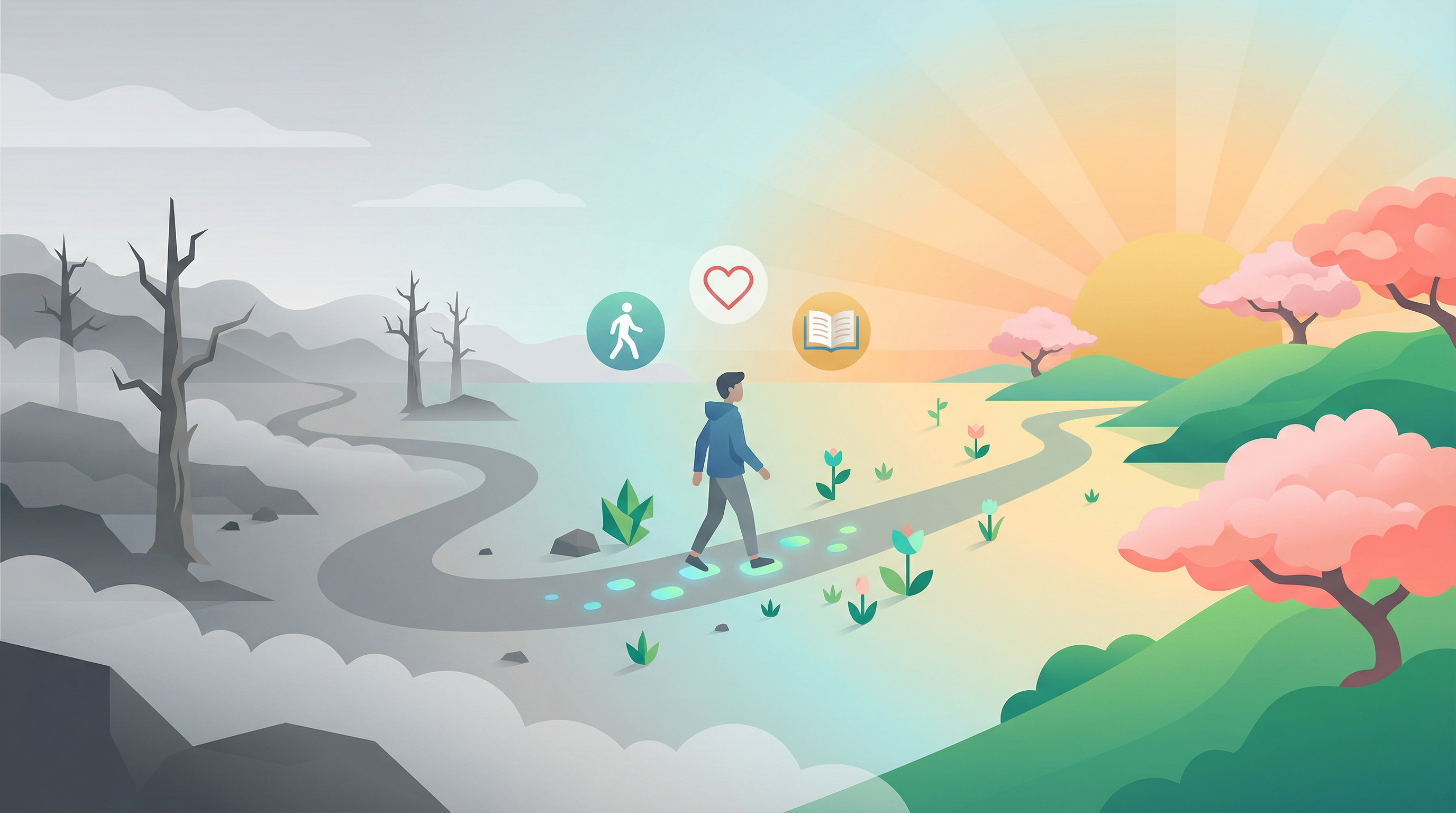
Your Inner Landscape reflects your balance over time. Stay balanced, and it flourishes. Overstimulate, and it gets foggy. It's a visual reminder of your progress.
Why Tapering Works Better Than Blocking
Hard limits create a psychological backlash. When something is forbidden, you want it more. This is called "reactance" - the more restricted you feel, the stronger the urge to break free.
The tapering model avoids this by:
- Keeping you in control - You set the rules, you can always override
- Creating positive alternatives - Instead of "don't scroll," it's "go for a walk and then scroll"
- Making the trade-off visible - You see the cost of scrolling, not just the restriction
- Allowing for bad days - If you blow through your budget, tomorrow is a fresh start
- Building gradually - Start easy, tighten over time as habits change
Most people find that after a few weeks, they naturally want to spend less time on draining apps. Not because they're blocked, but because they've found better alternatives and can feel the difference.
The Inner Landscape: Visualizing Your Progress
Numbers and statistics don't motivate everyone. That's why Stimulus includes the Inner Landscape - a living visualization that reflects your stimulation balance.
- Fog - When you're overstimulated, your landscape is grey and barren
- Spring - As you find balance, cherry blossoms begin to appear
- Summer - Consistent healthy habits bring lush greenery
- Golden Autumn - Long-term balance creates a serene, golden landscape
It's a gentle, non-judgmental way to see your progress over days and weeks - designed to be more motivating than charts and graphs.
Features That Support The Model
Smart Shields
When your balance is low, opening a draining app shows a gentle shield. You can always tap through - it's not a block, it's a pause. This small friction is often enough to break the autopilot behavior.
Movement Rewards
Stimulus connects to Apple Health to track your steps and workouts. Physical movement earns you points back - a tangible reward for getting off the couch.
Earning Apps
Not all screen time is equal. You can designate certain apps as "earning" - reading apps, meditation apps, educational apps. Using these adds to your balance instead of draining it.
Late Night Mode
Screens before bed are especially problematic. Late Night Mode makes shields stronger after a certain hour, helping you wind down.
Key Takeaways
- Stimulus uses a tapering model instead of hard blocks
- You earn and spend stimulation points throughout the day
- High-stimulation apps drain your budget; healthy activities restore it
- Shields are gentle reminders, not prison walls - you can always tap through
- The system creates a visible trade-off that makes scrolling intentional
- Your Inner Landscape visualizes your progress over time
- Start with a comfortable budget and tighten gradually as habits shift
Ready to Try a Different Approach?
Stimulus helps you earn your screen time instead of fighting against restrictions.
No spam. Just launch updates. Unsubscribe anytime.